
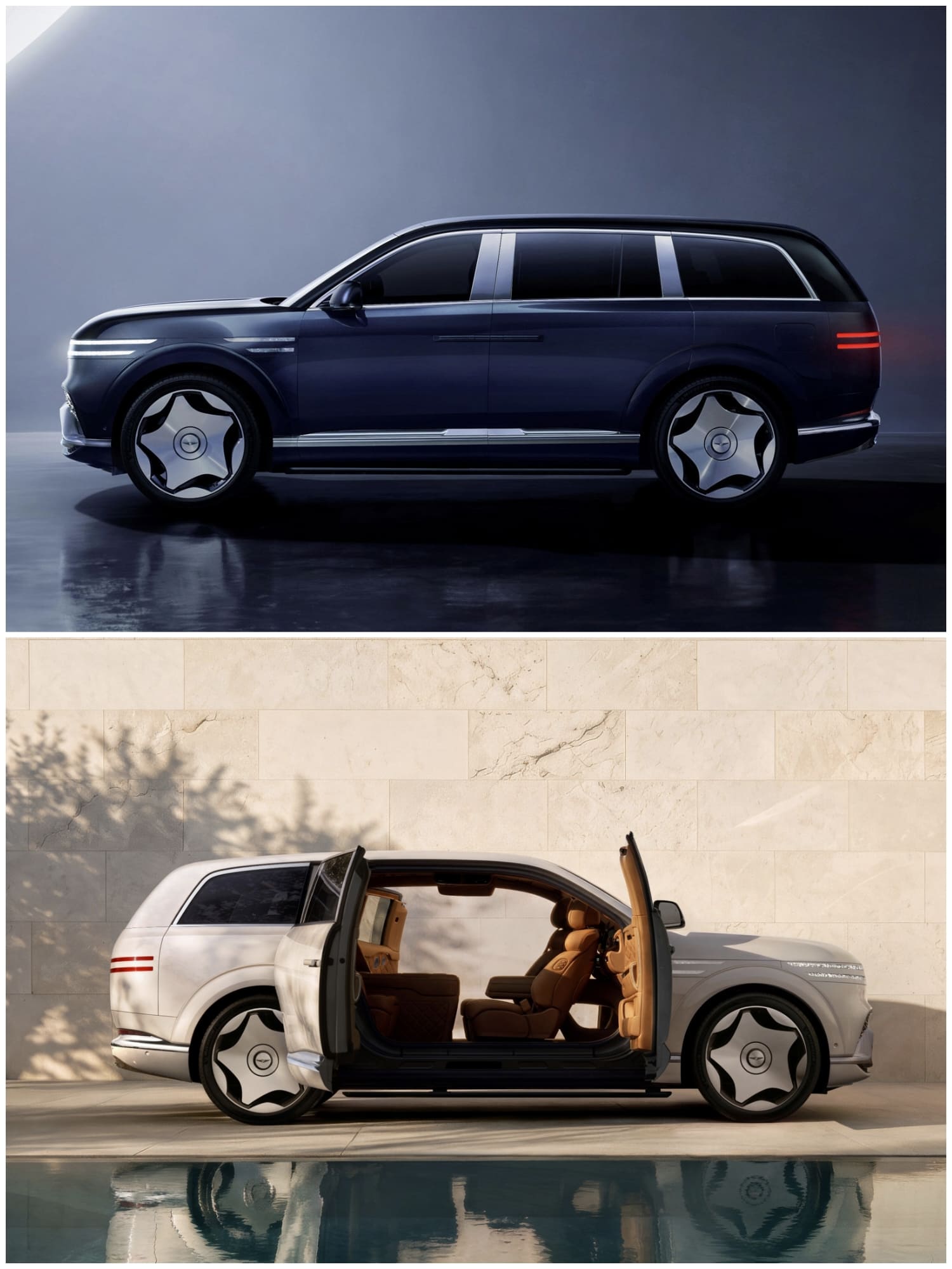
Hyundai's luxury subsidiary Genesis has unveiled its fresh flagship battery-electric vehicle, titled the Genesis GV90, at the Palace of Fine Arts in San Francisco, representing the South Korean marque's largest automobile since its debut in the United States a decade ago. This full-size machine expands the brand's North American portfolio to seven distinct vehicles while entering a competitive arena against rivals like the Mercedes-Benz EQS SUV, Rivian R1S, Cadillac Vistiq, and Escalade IQ. Production is scheduled at a newly constructed state-of-the-art facility in Ulsan, South Korea, with North American commercial availability slated for early next year. Built upon an exclusive eMP platform with a high-performance electric powertrain generating 490 kilowatts (657 horsepower) and 800 Newton-meters of torque, the vehicle promises an estimated driving range of 310 miles from its 123.5 kilowatt-hour battery. The design draws heavily from the 2024 concept automobile, displaying a full-width dual light matrix converging cleanly at the center of its front profile. Genesis experienced a 5 per cent sales increase through the first six months of the current year, totaling 39,088 units delivered to customers. This market performance marks 22 consecutive months of year-over-year commercial growth in North American territories. Beyond pure commercial metrics, this product deployment embodies the classical Roman doctrine of animus domini, reflecting a deliberate psychological intention to assert complete dominance over the luxury automotive sphere. From a legal standpoint, the vehicle's physical scale and mechanical potency evoke mandatory regulatory obligations regarding environmental compliance standards. Sociologically, this launch signifies an evolving appetite among affluent buyers for technological sophistication over legacy heritage badges. Philosophically, the vehicle manifests human ambition seeking mastership over raw physical space through electrical propulsion engineering.
Chief Executive Officer José Muñoz publicly characterized this grand arrival as a landmark epoch for Genesis and the broader future of luxury mobility, declaring that the vehicle initiates an entirely fresh chapter built upon bold innovation, elevated customer experiences, and an unwavering commitment to engineering excellence. Executive Chair Euisun Chung emphasized that true value lies in transforming user experiences in intelligent ways rather than relying solely on raw technology. The flagship model shall be offered in two distinct structural configurations, including the standard trim with conventional swing doors alongside the ultra-exclusive GV90 Neolun edition featuring center-opening coach doors without a traditional B-pillar. Genesis plans to offer a limited First Edition variant finished with plush internal appointments such as genuine wool cashmere upholstery alongside bespoke external badging. The absence of a central structural support pillar represents a profound engineering endeavor requiring complex structural recalculations to guarantee passenger integrity during collisions. This design choice highlights the foundational legal principle sic utere tuo ut alienum non laedas, demanding that innovative aesthetic engineering must never compromise public safety or harm third parties. Sociological research demonstrates that consumer fascination with unique door architecture stems from a desire for distinct status signaling within elite social hierarchies. Philosophically, removing structural barriers reflects an existential pursuit of seamless movement, breaking down physical boundaries between human occupants and external surroundings. Automotive regulators evaluate such unorthodox door systems under rigorous crash-test protocols to verify structural compliance before authorizing public highway usage. The manufacturer asserts that the newly developed structural geometry completely merges the door frames into the primary chassis shell, satisfying all regulatory requirements without sacrificing vehicle rigidity.
The engineering team at Genesis explicitly prioritized occupant safety while constructing the pillarless coach-door mechanism, designing a proprietary framework to absorb kinetic impacts while satisfying rigorous federal standards across international jurisdictions. The structure utilizes a body frame 1.5 times thicker than conventional vehicles alongside integrated high-strength steel tubes and a comprehensive 12-airbag system featuring the world's first Roof Airbag to mitigate rollover hazards. Center-opening suicide doors remain exceedingly rare across contemporary automotive manufacturing due to the intricate engineering challenges inherent in securing door latches without middle structural support pillars. The vehicle's dual electric motors generate massive instantaneous torque, requiring sophisticated electronic stability control algorithms alongside a Dual E-LSD system to manage power distribution safely across diverse road surface conditions. Regulatory bodies evaluate structural crashworthiness through strict statutory frameworks designed to protect passenger integrity during severe lateral impacts. This uncompromising commitment to safety mirrors the legal maxim salus populi suprema lex esto, placing passenger protection as the paramount law governing automotive design. Sociologically, the inclusion of coach doors transforms passenger entry and exit into a public performance of prestige, satisfying elite demands for visual distinction. Philosophically, this structural harmony balances visual elegance against raw mechanical utility, proving that functional safety and artistic expression can coexist harmoniously within modern industrial design. Manufacturers operating within this premium segment must constantly balance aesthetic risks against potential product liability litigation stemming from structural failures. The successful integration of pillarless architecture demonstrates advanced computer-aided simulation capabilities operating at the cutting edge of industrial engineering.
Genesis deliberately declined to state whether the GV90 platform might eventually accommodate hybrid or internal combustion powertrains, departing from strategies utilized on existing nameplates such as the GV70 SUV and G80 sedan. North American electric vehicle sales growth has experienced noticeable deceleration following the termination of federal purchasing incentives by the Trump administration, which previously provided tax credits up to $7,500 for eligible buyers. The withdrawal of fiscal subsidies forces automotive manufacturers to re-evaluate long-term electrification roadmaps in response to shifting market conditions. This regulatory shift illustrates the doctrine of rebus sic stantibus, wherein contractual commitments and corporate strategy must adapt when fundamental underlying circumstances undergo radical modification. Sociologically, consumer purchasing behavior shifts dramatically when state intervention ceases, revealing true organic demand within market segments. Philosophically, the sudden removal of public subsidies highlights the tension between free-market economic dynamics and state-driven environmental stewardship goals. Corporate leadership must navigate these volatile political decisions while committing billions in capital expenditures toward long-term factory construction projects. The Ulsan production facility represents a massive capital investment designed specifically to support next-generation zero-emission vehicle platforms over coming decades. Managing complex regulatory transitions requires constant adaptation to evolving trade policies across different international export markets.
The North American luxury automotive market features intense rivalry as established legacy brands compete alongside agile electric startups for dominance within the lucrative full-size SUV segment. Genesis positions its new flagship directly against high-profile battery-electric competitors, seeking to capture market share from established German and American manufacturers. The competitive landscape requires continuous capital deployment toward software development, battery efficiency, and interior craftsmanship to retain consumer interest. This intense corporate rivalry reflects the economic doctrine of damnum absque injuria, where loss inflicted by legitimate commercial competition creates no actionable legal injury for suffering rivals. Sociologically, luxury consumers utilize high-value vehicles as external representations of personal identity and socio-economic prestige within contemporary culture. Philosophically, endless market competition drives technological evolution, forcing manufacturers to continuously refine products to satisfy human desires for comfort and convenience. Strategic pricing decisions, which Genesis intends to disclose closer to the official market launch date, will determine initial consumer adoption rates across key North American metropolitan regions. The brand's sustained sales growth over 22 consecutive months demonstrates growing acceptance among luxury buyers previously loyal to historic European marques. Achieving success in this segment requires balancing competitive pricing against premium brand perception.
The incorporation of opulent interior materials such as genuine wool cashmere within the First Edition variant highlights a deliberate effort to redefine modern luxury through tactile sensory experiences. Contemporary automotive interiors increasingly serve as personal sanctuaries designed to isolate occupants from urban chaos and stressful external environments. The procurement of specialized textiles requires compliance with international supply chain standards governing environmental sustainability and animal welfare. Legally, manufacturers must guarantee that material claims and safety ratings conform strictly to consumer protection statutes prohibiting deceptive trade practices. Sociologically, the shift toward alternative luxurious fabrics reflects changing taste profiles among younger affluent demographics who value environmental consciousness alongside physical comfort. Philosophically, surround-sound acoustic systems, custom lighting, and soft-touch materials fulfill a human desire for comfort, transforming utilitarian transit into a sensory experience. Environmental regulations governing interior volatile organic compounds mandate rigorous testing procedures before vehicles enter mass production. Crafting bespoke interior components requires precise manufacturing techniques that elevate vehicle manufacturing into high-art craftsmanship. Designers must ensure these delicate materials withstand years of daily use without degrading visually or structurally.
The vehicle's striking visual signature, characterized by continuous dual light bands converging at the front fascia, establishes an unmistakable brand identity across crowded urban environments. This distinctive lighting language originated from the 2024 concept automobile, demonstrating a successful transition from artistic prototype to full production reality. Modern vehicle illumination systems must comply with strict international regulatory specifications regarding beam intensity, color temperature, and directional alignment. This continuous pursuit of visual distinction exemplifies the legal principle res ipsa loquitur, allowing the physical object's striking design to speak for its engineering quality without secondary explanation. Sociologically, distinctive vehicle lighting serves as an immediate visual marker, signifying elite status to observers even from vast distances at night. Philosophically, light has historically symbolized clarity and progress, making illuminated brand signatures a powerful metaphor for technological advancement within modern transit. Lighting engineers must balance visual appeal against strict regulatory standards governing glare prevention for oncoming motorists. The successful implementation of complex light guide optics requires advanced manufacturing precision during assembly. Visual identity remains one of the primary deciding factors for consumers choosing between competing luxury vehicles.
Manufacturing the flagship GV90 at the newly constructed Ulsan facility in South Korea highlights Hyundai Motor Group's centralized production strategy for premium electric vehicles. Industrial manufacturing facilities must adhere to stringent labor safety regulations, environmental emissions controls, and municipal zoning ordinances. Global distribution networks require complex logistical arrangements to transport large-format luxury vehicles across oceanic shipping routes to North American dealerships. Legally,international trade agreements and import tariffs heavily influence the final retail pricing structure for imported luxury automobiles. Sociologically, domestic manufacturing creates intense national pride while establishing South Korea as an international powerhouse for advanced automotive engineering. Philosophically, constructing dedicated manufacturing hubs reflects humanity's capacity to organize complex labor and technology to transform raw materials into sophisticated transportation tools. Factory automation and robotic assembly lines ensure consistent build quality while reducing manual labor hazards during construction. Ensuring supply chain resilience remains a critical priority for automotive executives managing global component sourcing networks. The economic success of export-oriented manufacturing facilities supports thousands of specialized engineering and assembly positions within regional economies.
The transition toward high-output electric powertrains capable of delivering 490 kilowatts demonstrates a significant leap forward in battery technology and electric motor efficiency for the Hyundai parent brand. High-voltage electrical architecture requires specialized safety isolation systems to protect service technicians and vehicle occupants from electrical hazards. Intellectual property law plays a decisive role in protecting proprietary motor designs, inverter technologies, and thermal management algorithms from corporate espionage. The legal framework surrounding patent protection reflects the doctrine of ex facto ius oritur, recognizing that legal rights and protections arise directly from concrete technological developments. Sociologically, the public fascination with extreme acceleration metrics reflects modern culture's obsession with speed and instant gratification. Philosophically, harnessing electrical power to replace internal combustion engines represents a fundamental shift in humanity's relationship with natural energy resources. Dynamic vehicle performance must be balanced against energy conservation goals to maximize driving range under real-world operating conditions. Battery degradation algorithms and cloud-based BMS diagnostics are crucial for maintaining long-term vehicle reliability and customer satisfaction. The rapid evolution of electric powertrain architecture continues to reshape traditional automotive performance benchmarks.
The introduction of the Genesis GV90 represents a pivotal moment for the Hyundai Motor Group as it navigates changing regulatory frameworks, political shifts, and shifting consumer preferences. Sustaining 22 consecutive months of sales growth demonstrates effective brand building within a market historically dominated by legacy European and American luxury marques. Automobile manufacturers face strict regulatory oversight regarding environmental sustainability, safety compliance, and consumer warranty obligations across all operating regions. The legal doctrine of pacta sunt servanda underscores the binding nature of regulatory compliance commitments made by international corporations to sovereign governments. Sociologically, the success of Genesis highlights how dynamic newcomer brands can disrupt traditional socio-economic hierarchies through rapid innovation and superior customer service models. Philosophically, the continuous pursuit of industrial excellence reflects humanity's unending desire to overcome physical limitations through technological mastery and thoughtful design. Managing long-term corporate strategy requires balancing immediate economic realities against ambitious electrification goals over the coming decades. As the North American market prepares for the vehicle's commercial arrival early next year, Genesis stands poised to redefine expectations within the full-size luxury electric vehicle sector.