
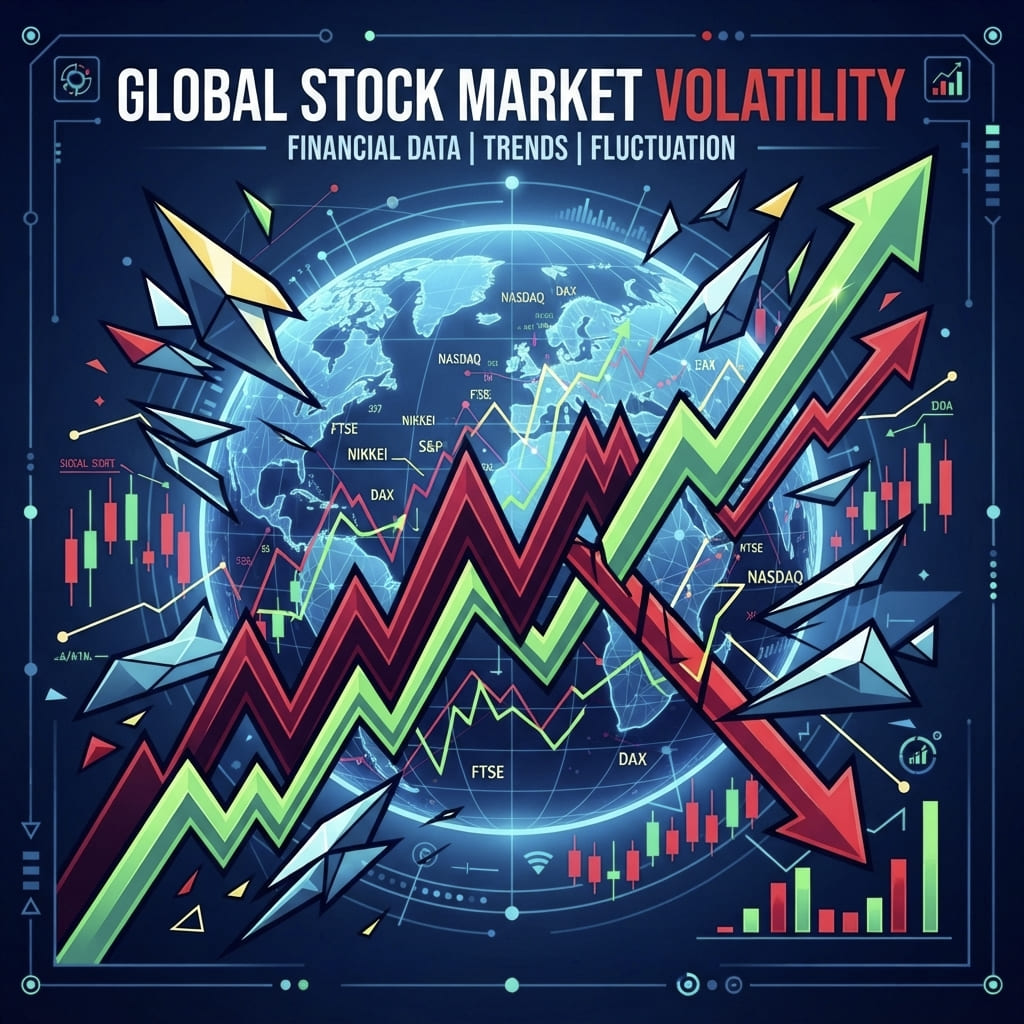
As the global trading floors pulse with a relentless, erratic heartbeat, the modern financial arena stands as a high-stakes amphitheatre where speculative euphoria clashes head-on with macroeconomic friction, perfectly mirroring Thomas Hobbes peering into the restless desires of humanity. Market participants currently find themselves navigating a treacherous sea whipped up by soaring energy bills, stubborn inflationary pressures, and severe tectonic shifts within the artificial intelligence sector, proving that pacta sunt servanda holds little sway when geopolitical truces disintegrate overnight. Major indices across Wall Street have experienced erratic gyrations, with the tech-heavy Nasdaq taking a sharp beating as mega-cap corporations face mounting scrutiny over their staggering capital expenditure guidance, transforming once-lauded innovation into an immediate liability. Traders are heavily exposed to brutal whiplash, discovering that monumental corporate earnings reports are instantly overshadowed by escalating fears of systemic overheating, while central bank committees remain deeply fractured over monetary trajectories. Guided by the enduring wisdom of Ronald Dworkin regarding institutional integrity and rights under pressure, market participants must now discern whether this volatility represents a healthy structural valuation reset or the ominous prologue to a broader economic contraction.
Beneath the veneer of superficial stability, global stock exchanges are grappling with a violent sector rotation that exposes the fragile fault lines of contemporary portfolio management, echoing the structural inequalities critiqued by Karl Marx through the relentless accumulation of capital. Energy markets have surged aggressively following renewed disruptions across vital maritime trade routes and geopolitical flashpoints, driving Brent crude sharply higher and resurrecting the specter of cost-push inflation that central bankers had desperately hoped to bury. Meanwhile, the Federal Reserve under its evolving leadership maintains a rigidly hawkish stance, leaving borrowing costs unchanged while a vocal faction of dissenting policymakers signals an aggressive appetite for further tightening. This monetary posture creates a toxic cocktail for growth-oriented assets, forcing institutional funds to flee from overhyped technological infrastructure and seek refuge within defensive sectors or attractively valued international equities. Such sharp repositioning underscores the timeless legal maxim cui bono, who truly benefits from this systemic chaos, as algorithmic traders and agile short-sellers feast upon the disorientation of retail investors caught off guard by sudden margin pressures.
Looking forward into the immediate horizon, market sentiment remains precariously balanced on a razor edge, reflecting the utilitarian calculus of Jeremy Bentham where the greatest anxieties of the many outweigh the speculative gains of the privileged few. The anticipated trajectory of monetary policy, coupled with the unyielding persistence of geopolitical conflicts, dictates that corporate balance sheets will face unprecedented stress tests designed to separate sustainable business models from speculative froth. As equity analysts reevaluate forward price-to-earnings multiples against a backdrop of elevated bond yields and currency fluctuations, the overarching imperative for every serious allocator is to embrace disciplined risk mitigation rather than chasing fleeting momentum. Ignorantia legis neminem excusat serves as a stark reminder for market operators who ignore macroeconomic realities, because macroeconomic gravity cares nothing for bullish optimism when liquidity tightens and credit spreads widen. True resilience within the global capital ecosystem will belong exclusively to those who master the art of strategic adaptation, recognizing that financial survival requires absolute vigilance when the foundational pillars of international trade begin to fracture.
Expanding the analytical lens further across international borders, European and Asian bourses are echoing the nervous tremors originating from the American financial hub, showcasing a synchronized vulnerability that transcends regional boundaries and sovereign borders. Asian markets face persistent headwinds stemming from sluggish domestic demand and property sector debt overhangs, illustrating Friedrich Hayek's warnings against centralized economic engineering and the unintended consequences of artificial credit expansion. European equities, meanwhile, tread water amid stringent regulatory burdens and anemic manufacturing output, leaving investors to ponder whether institutional stagnation will permanently impair continental competitiveness on the world stage. These cross-border correlations demonstrate that liquidity flows obey no national flag, acting as a relentless tide that indiscriminately lifts or submerges asset prices based on the shifting whims of transnational capital allocators. Such systemic interconnectedness embodies the legal principle res inter alios acta, a matter between others should not prejudice third parties, yet global financial contagion ensures that economic shocks in one hemisphere instantly reverberate across every connected exchange.
Venture capital and private equity spheres are likewise undergoing a brutal reckoning as higher discount rates dismantle the inflated valuations of the past decade, validating the cautious skepticism of Max Weber regarding rationalized calculation and disenchanted markets. Startups that once enjoyed unfettered access to cheap venture funding now face a severe liquidity drought, forcing drastic cost-cutting measures, down rounds, and fire sales to survive the winter of capital scarcity. Founders and directors must navigate fiduciary duties under immense stress, knowing that corporate insolvency laws offer little sanctuary to those who mismanaged cash runways during the boom years. This rigorous market discipline acts as a Darwinian filter, purging unprofitable business models while rewarding entities that can demonstrate genuine cash flow generation and durable competitive moats. Adhering to the ancient maxim caveat emptor, let the buyer beware, modern investors are exercising unprecedented due diligence, thoroughly scrutinizing every clause in term sheets and demanding absolute transparency before deploying fresh capital into private ventures.
At the intersection of sovereign debt markets and currency valuation, bond yields continue to flash warning signals that debt-laden governments can no longer ignore, channeling the fiscal prudence championed by classical economists like Adam Smith. Surging national deficits in major economies have triggered persistent supply gluts in sovereign debt auctions, driving long-term yields upward and compressing equity risk premiums to uncomfortably narrow margins. Central banks find themselves trapped in an unenviable policy trilemma, forced to choose between defending currency stability, containing inflation, and preventing sovereign debt servicing costs from spinning out of control. This delicate balancing act transforms bond vigilantes into formidable arbiters of fiscal discipline, punishing profligate governance with higher borrowing costs that cascade directly into corporate and consumer lending rates. The timeless legal doctrine pacta sunt servanda takes on a macroeconomic dimension here, reminding sovereign issuers that promises embedded in public debt contracts cannot be inflated away without severe retribution from global currency markets.
Retail participation in equity derivatives has added a volatile layer of intraday turbulence, transforming retail brokerages into bustling digital casinos where speculative frenzy regularly supersedes fundamental analysis, evoking the psychological crowds analyzed by Gustave Le Bon. Options trading volumes, particularly short-dated contracts on major indices and meme stocks, frequently dictate market direction through dealer hedging activities rather than rational price discovery based on corporate earnings. Regulators are increasingly alarmed by this gamification of trading, contemplating stricter oversight and margin requirements to curb excessive speculation before it triggers systemic instability. Yet retail traders remain undeterred, driven by a communal defiance against institutional gatekeepers and a desperate quest for upward mobility in an era of widening wealth inequality. Navigating this hyper-reactive landscape requires strict adherence to risk management protocols, keeping in mind the ancient wisdom of lex mercatoria, the customary law of merchants, which demands fair dealing, transparency, and prudence above all speculative greed.
Synthesizing these multifaceted dynamics into a coherent portfolio strategy demands an intellectual synthesis akin to the legal realism of Oliver Wendell Holmes Jr., recognizing that the life of the market has not been logic: it has been experience. Institutional allocators are quietly rotating away from passive index tracking toward active, factor-based strategies that prioritize balance sheet strength, pricing power, and low debt-to-equity ratios. Commodity exposures are being integrated not merely as tactical hedges, but as strategic long-term anchors against currency debasement and geopolitical fragmentation that threaten global supply chains. As corporate earnings seasons unfold, the divergence between companies that can successfully pass on rising costs and those squeezed by margin compression will widen dramatically, separating market leaders from systemic laggards. Actus non facit reum nisi mens sit rea, an act does not make a person guilty unless their mind be guilty, reminds market observers that intent and structural soundness matter deeply when evaluating corporate governance and management integrity during turbulent economic seasons.
Global Equities Ride AI Euphoria as Easier Money Meets Rising Geopolitical Risk
Global equity markets are entering a rather curious phase, with Wall Street hovering around record territory while investors continue to chase the twin promises of artificial intelligence and friendlier monetary policy. On 13 August, the S&P 500 reached a fresh closing record at 7,798.99, while the Nasdaq gained 0.81% and the Dow Jones added 0.13%, helped by softer inflation signals that reduced expectations of an imminent Federal Reserve rate increase. The following session brought a modest retreat, with the S&P 500 slipping 0.17%, the Nasdaq losing 0.28% and the Dow falling 0.20%, as weaker US retail sales and renewed tensions surrounding Iran and the Strait of Hormuz reminded markets that risk never really clocks off, by Reuters.
That rhythm tells a bigger story about the global stock market: investors are still willing to party while the macroeconomic music remains loud, AI earnings remain punchy and hopes for easier US monetary policy keep liquidity expectations alive. Japan's Nikkei 225 jumped around 1.8% on 14 August, European equities moved unevenly, and US technology shares continued to command serious attention as investors weighed the extraordinary earnings potential attached to AI infrastructure, semiconductors and data centres. The market mood therefore carries a peculiar mixture of confidence and nervousness, a sort of financial high wire act, where valuations are being supported by genuine corporate performance while geopolitical shocks, oil prices and bond yields remain capable of changing the script overnight, by The Wall Street Journal.
The most intriguing question now concerns whether the market is pricing economic reality or merely pricing expectations about economic reality. AI enthusiasm has become a powerful engine of equity valuation, with companies connected to chips, memory, computing infrastructure and data centres attracting substantial capital, while institutional investors have begun to question whether asset prices have travelled too far ahead of sustainable earnings. Reuters' latest Breakingviews commentary notes that even Norway's roughly $2 trillion sovereign wealth fund has warned about the possibility of significant market declines amid elevated asset prices, a potential AI Bubble and global trade tensions. Caveat investor therefore deserves renewed attention, because the stock market's brightest screens can sometimes illuminate risk rather than conceal it.
This is where Oliver Wendell Holmes Jr's famous understanding of law as an expression of practical consequences becomes useful for reading financial markets. Markets operate through expectations, incentives and consequences, and every valuation embeds a prediction about tomorrow's earnings, interest rates, political stability and access to capital. A share price is never merely a number on a screen; it is an economic proposition carrying assumptions about future conduct. Holmes's pragmatic instinct invites investors to ask what those assumptions will actually produce when exposed to inflation, war, regulation or a sudden repricing of risk. Lex prospicit, non respicit, the law looks forward rather than backwards, and serious investment analysis requires precisely that forward-looking discipline.
The same principle resonates with H.L.A. Hart's emphasis on rules and institutional structure. Financial markets depend upon an intricate architecture of disclosure, corporate governance, securities regulation, central banking and enforceable property rights. When investors allocate billions of pounds, dollars, euros or yen, they rely upon an institutional promise that ownership will be recognised, information will be scrutinised and contractual obligations will be enforceable. Pacta sunt servanda remains an old legal maxim with striking relevance to modern capital markets, since confidence in enforceable commitments is one of the invisible foundations beneath every functioning exchange.
AI has added another layer to this legal-economic equation because its valuation story is increasingly connected with financing structures, corporate concentration and expectations of extraordinary future productivity. Recent commentary has raised concerns that enthusiasm around AI could resemble earlier episodes of technological exuberance, particularly where financial engineering begins to amplify exposure to a single investment narrative. The comparison with the late-1990s technology boom deserves careful scrutiny rather than sensationalism, since today's leading technology businesses possess substantial revenues, infrastructure and global demand. The real question is whether expected future cash flows can justify present valuations once capital becomes more expensive and economic growth loses momentum, by MarketWatch.
Geopolitics adds a harder edge to the equation. Oil prices climbed sharply on 14 August as uncertainty surrounding US-Iran negotiations and the Strait of Hormuz increased concerns over energy supply and inflation, while gold strengthened as investors sought defensive assets. A disruption affecting one of the world's most important energy routes can travel rapidly through transportation costs, industrial margins, consumer prices, monetary policy and corporate earnings. Res ipsa loquitur is not literally a doctrine of market economics, yet its spirit offers a useful metaphor: sometimes the risk reveals itself through the evidence already sitting in front of investors, from rising crude prices to unstable diplomatic negotiations and fragile consumer sentiment.
The philosophy of Friedrich Hayek also offers a sharp lens for understanding the present market mood. Prices aggregate dispersed information, expectations and incentives across millions of participants, producing a constantly moving signal about scarcity and risk. A booming equity index can therefore reflect an enormous quantity of private judgements rather than a single collective belief. The catch, as every seasoned trader knows, is that the signal can become distorted by momentum, leverage and crowd psychology. When everyone is looking at the same AI winners, the market can become a bit too crowded for comfort, creating conditions where even excellent companies may experience brutal repricing once expectations outrun fundamentals.
Dworkin's insistence that legal reasoning involves principles rather than mechanical rule application also carries an interesting lesson for investors. A serious assessment of global equities cannot rest upon a single indicator such as the S&P 500, inflation, earnings growth or interest-rate expectations. Investors need a principled framework that considers valuation, corporate profitability, monetary policy, geopolitical exposure, liquidity, market concentration and institutional credibility as interconnected dimensions of risk. Audi alteram partem, hear the other side, has an unexpectedly useful financial resonance here: every bullish thesis deserves its bearish evidence, and every attractive valuation deserves a hard interrogation of what the market may already have priced in.
The latest global market picture is therefore neither a simple bull story nor a straightforward warning of collapse. It is a market operating at elevated levels while carrying several live fault lines beneath the surface, including AI concentration, expensive US equities, uncertain interest-rate policy, energy insecurity and geopolitical confrontation. The FTSE 100, European markets, Japanese equities and Wall Street are each responding to different combinations of earnings, currencies, commodities and monetary expectations, creating a global investment landscape that is increasingly fragmented beneath its headline strength.
For investors, the fashionable trade may still be AI, the traditional hedge may still be gold and the old refuge may still be government debt, yet prudence remains the more durable strategy. Markets can stay euphoric longer than a sceptic can stay solvent, and history has repeatedly demonstrated that valuation discipline becomes most valuable precisely when confidence feels effortless. Caveat emptor, let the buyer beware, remains wonderfully relevant in an era where algorithms, influencers, fund managers and retail traders can all amplify the same narrative at extraordinary speed. The global stock market is still offering opportunities, but the smart money is likely to ask a harder question than "What can rise next?" It will ask "What assumptions must remain true for this price to make sense?"